
Oct 27, 2026News & Insights
How Do You Test a Wireless Charger for Drop Resistance?
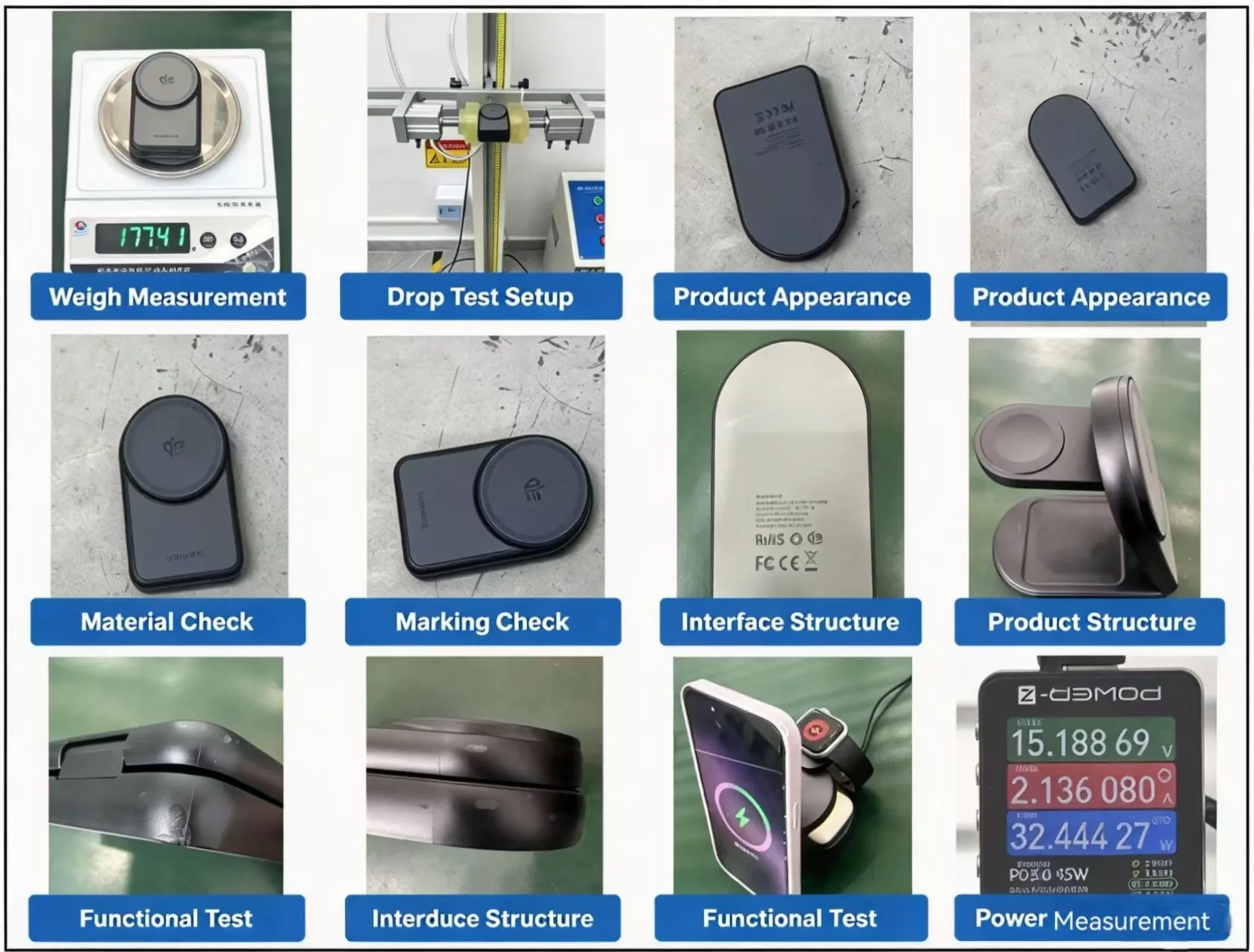
Drop testing verifies that a wireless charger can withstand transportation impacts while maintaining its structural integrity and normal functionality.
Drop testing verifies that a wireless charger can withstand transportation impacts while maintaining its structural integrity and normal functionality.
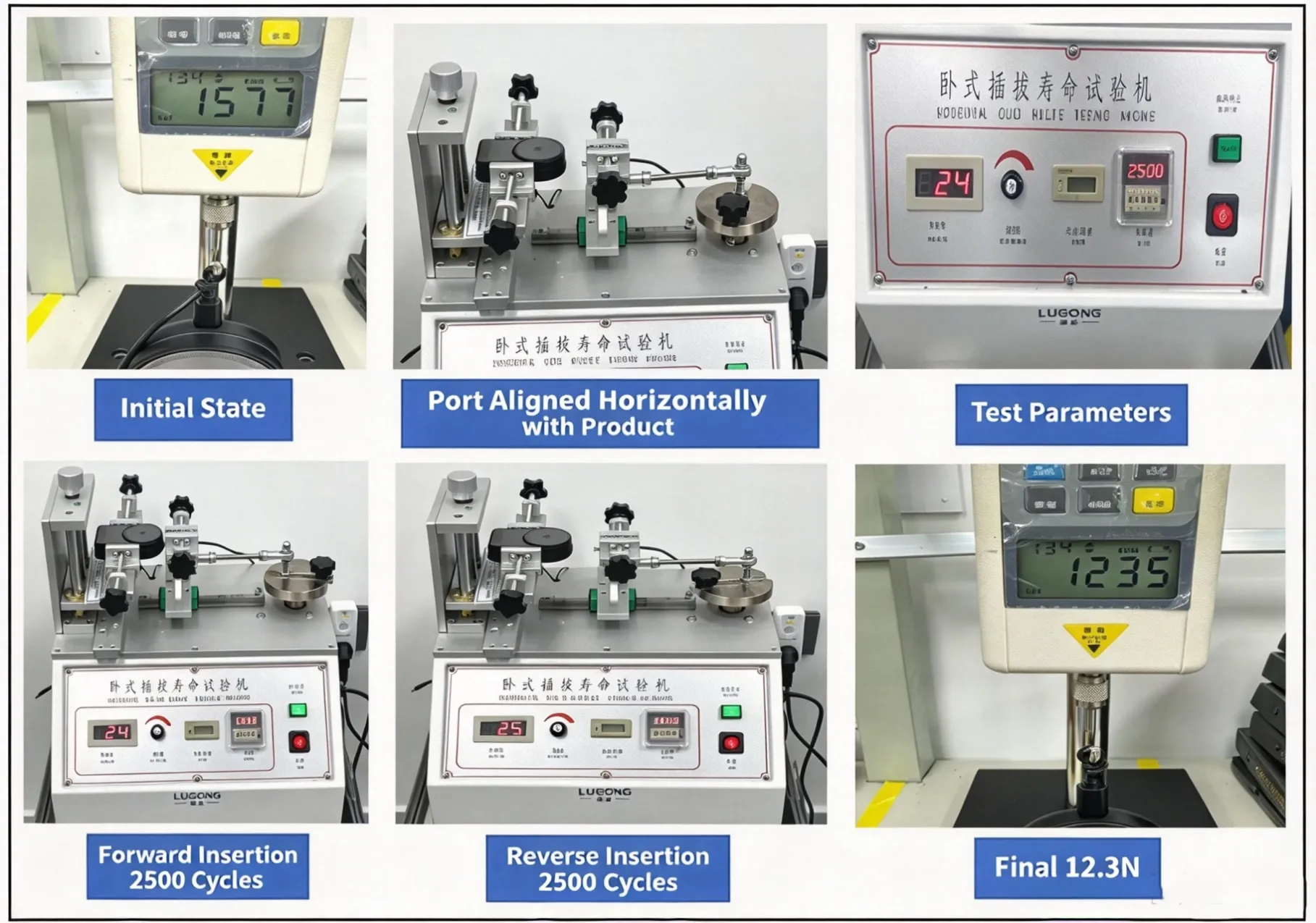
Plug-and-unplug testing verifies that a wireless charger's USB-C port can withstand repeated connection and disconnection while maintaining reliable performance.
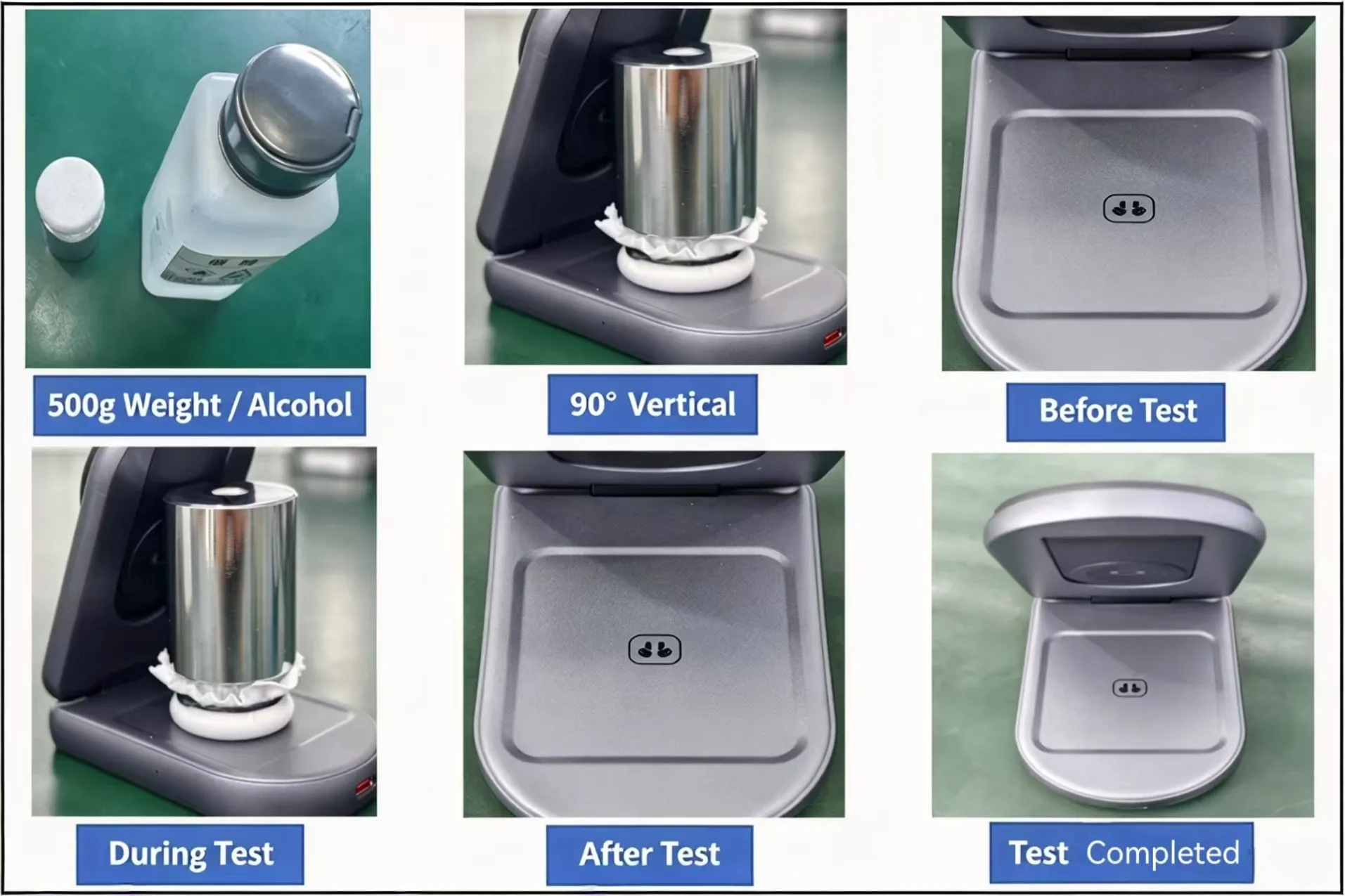
Alcohol resistance testing verifies that a wireless charger's surface coating can withstand repeated alcohol wiping while maintaining its appearance and durability.
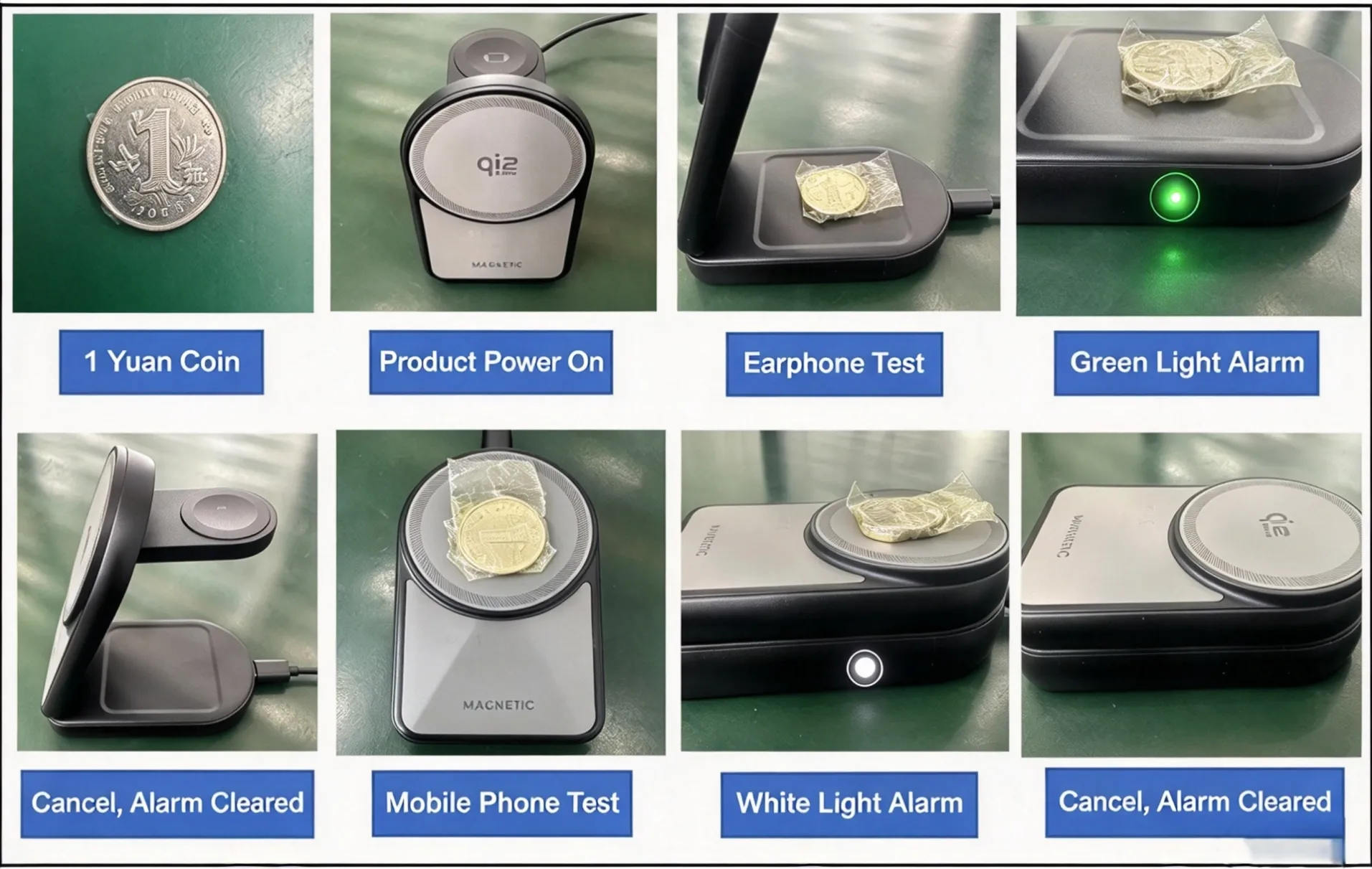
Learn how wireless charger foreign object detection (FOD) works, how FOD testing is performed, and what buyers should check when evaluating charger safety.
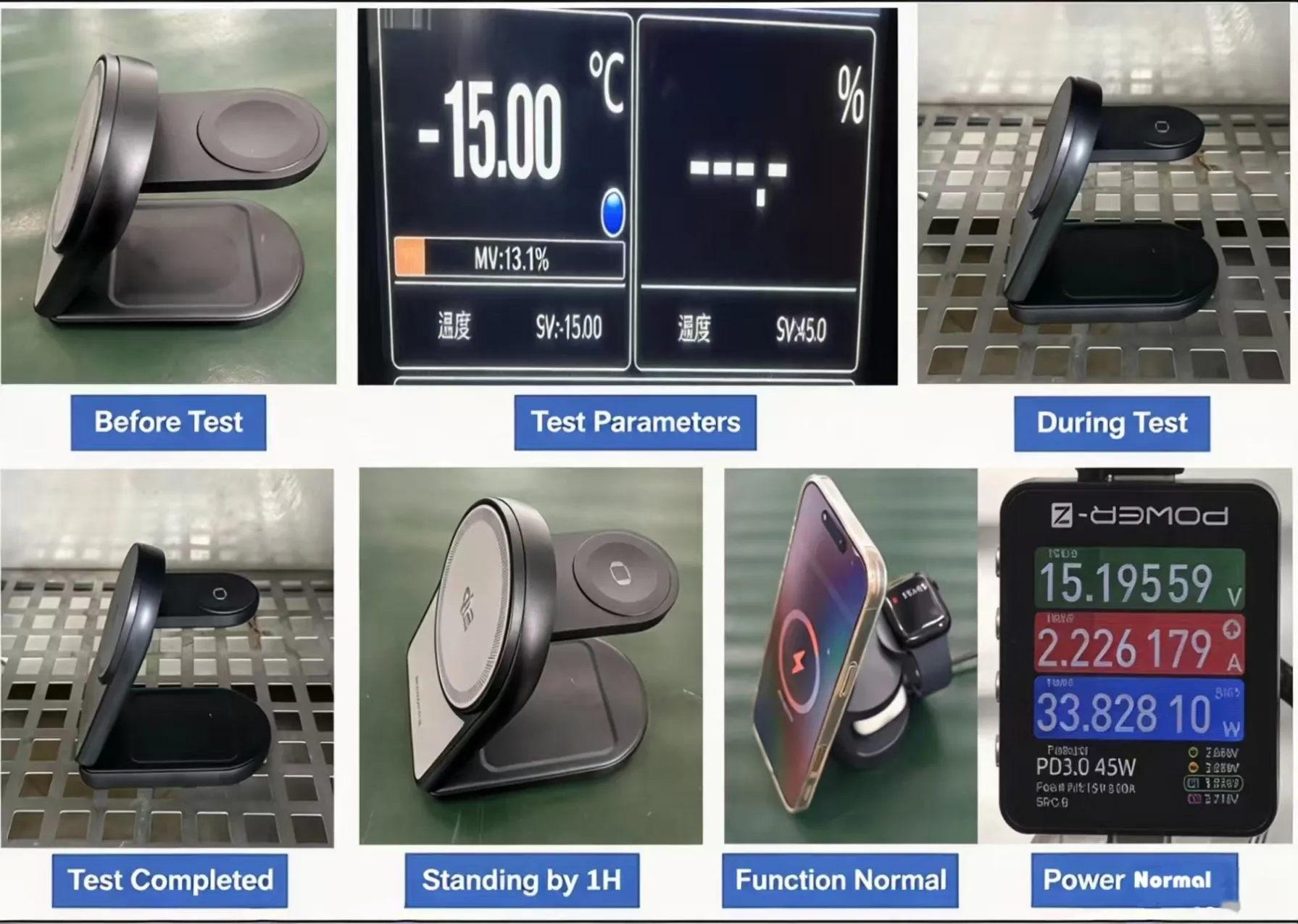
Low temperature testing verifies that a wireless charger can maintain stable performance, reliable charging, and material integrity after 48 hours at -15°C.
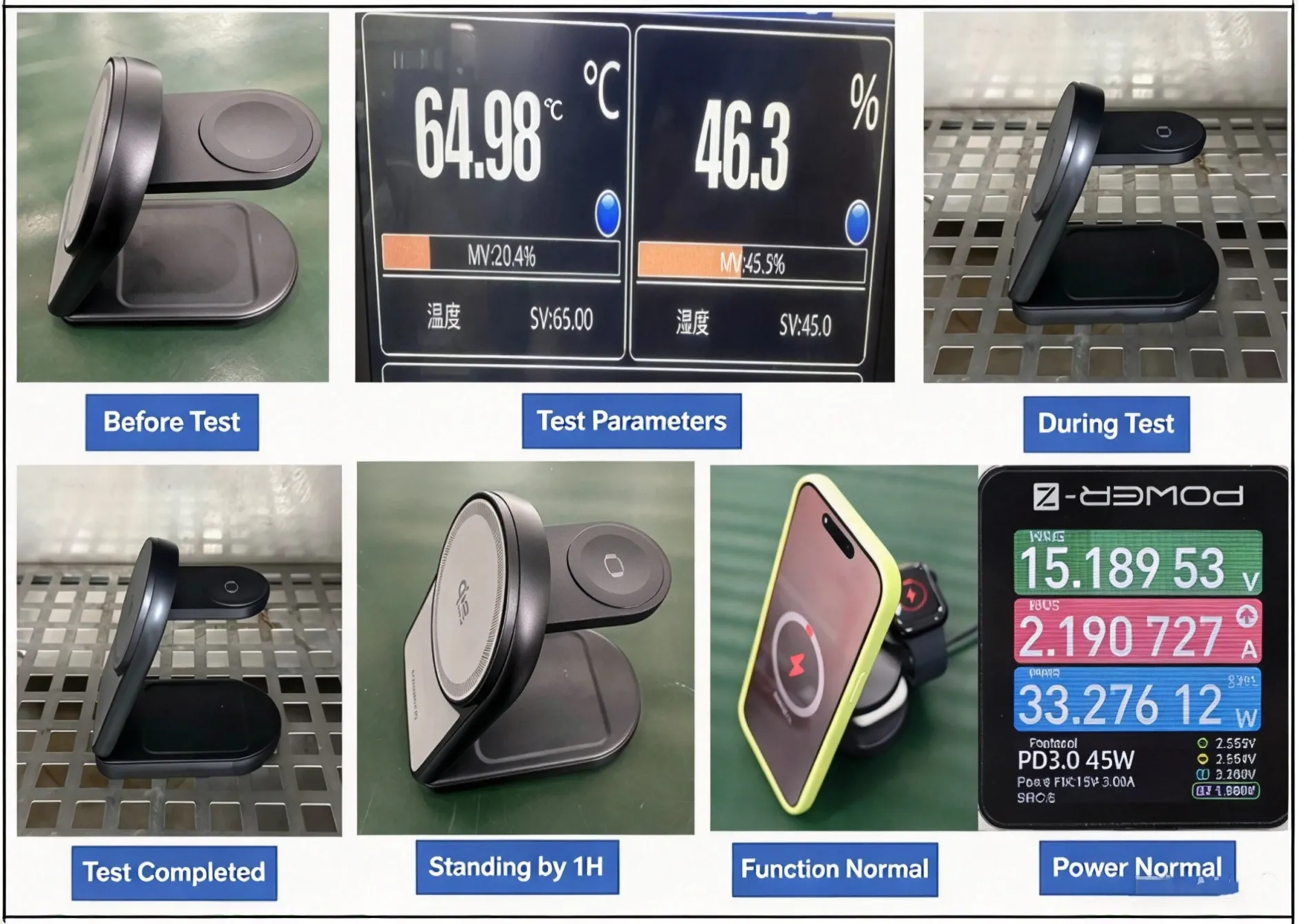
High temperature testing evaluates the performance, reliability, and durability of a wireless charger under extreme heat conditions.
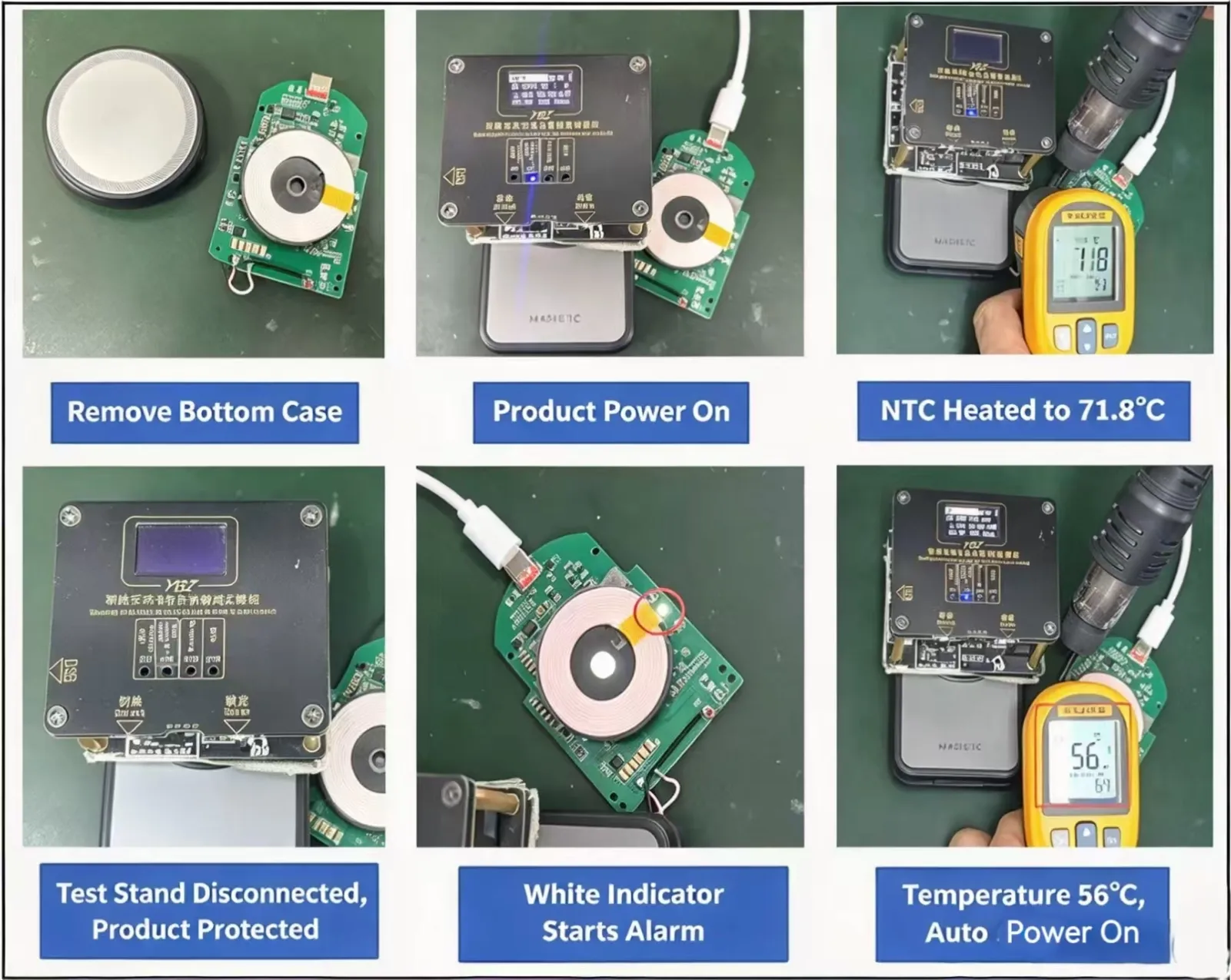
Learn why over-temperature testing matters for wireless chargers and how Cwin verifies thermal protection, power reduction, and automatic recovery.
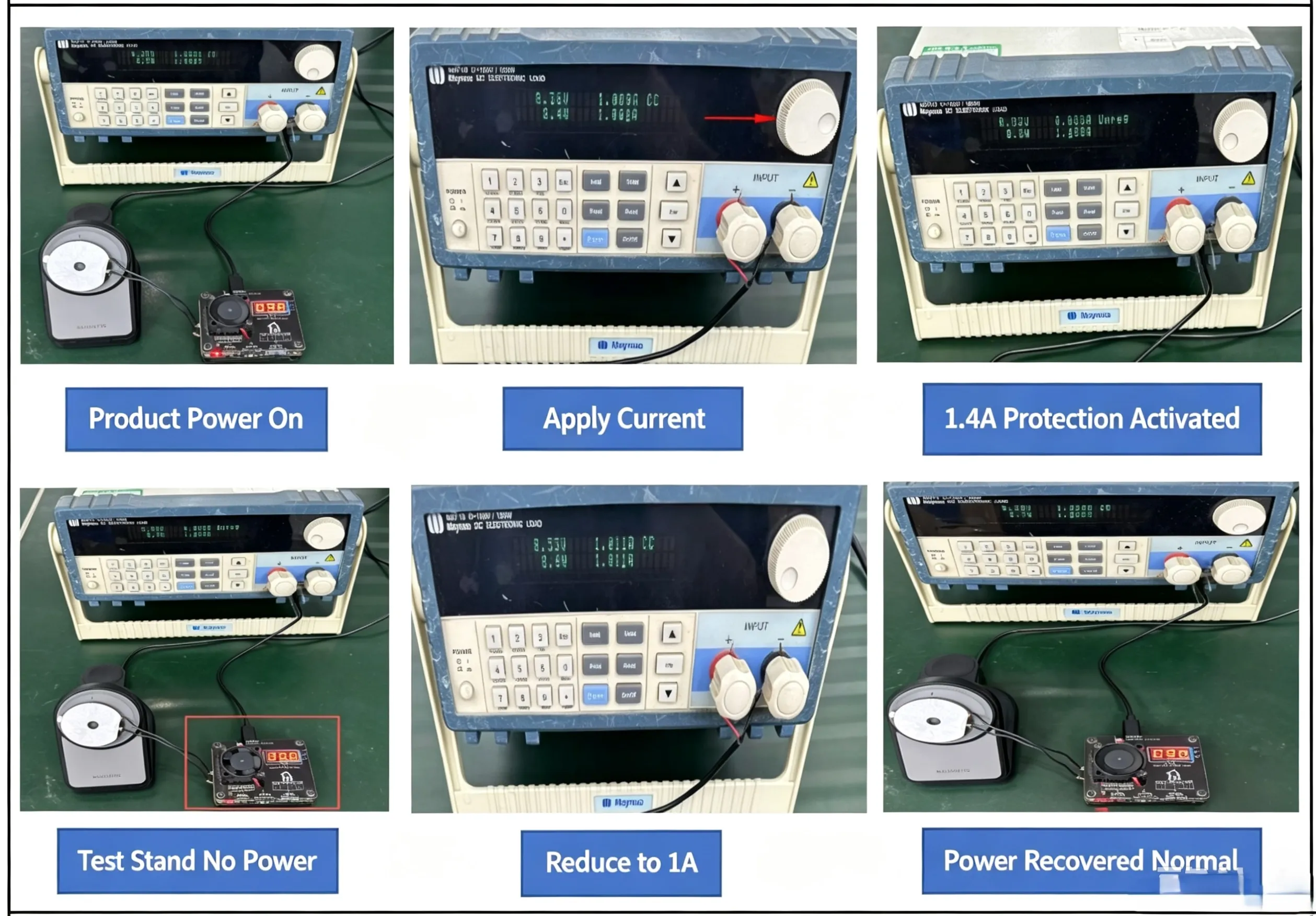
Learn why over-current testing is important for wireless chargers and how Cwin verifies protection, stability, and safe recovery during OEM/ODM development.
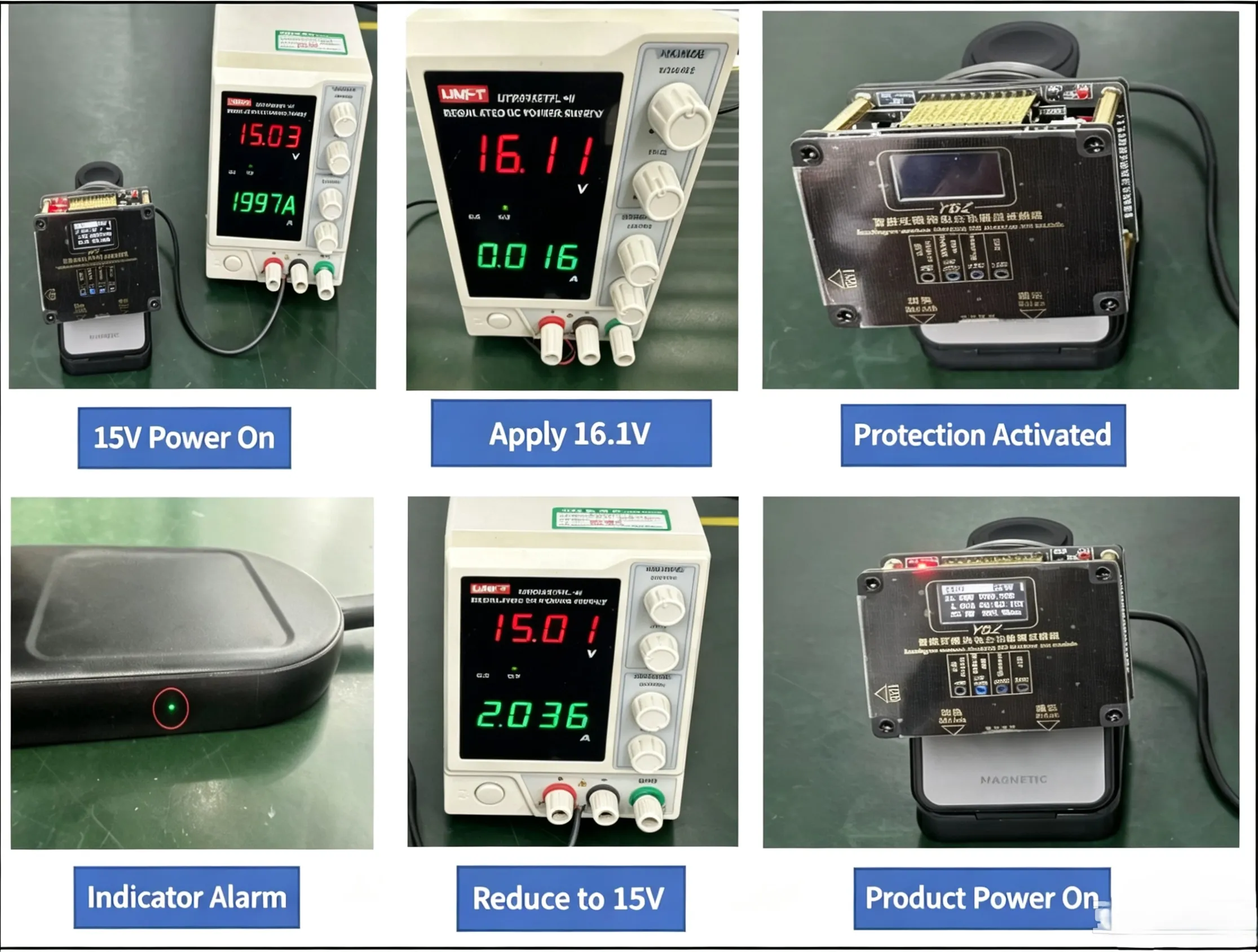
Simulate the condition when the input voltage exceeds the rated range, to verify the capability of the power system to clear faults automatically and ensure safe and stable operation.
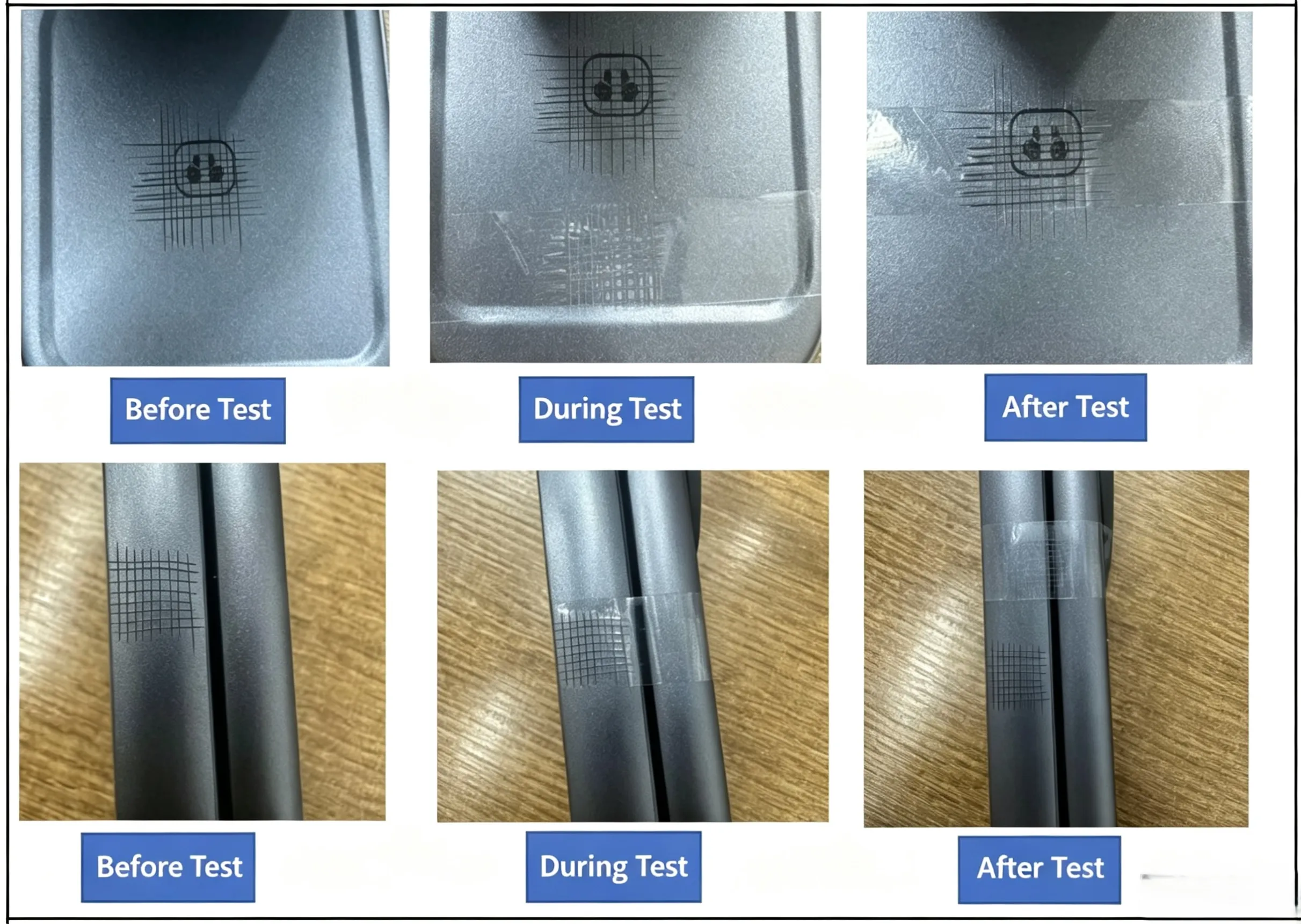
To verify whether the adhesion of silk-screened logo and paint coating on the surface of wireless charger samples meets requirements.