
Oct 27, 2026News & Insights
How Do You Test a Wireless Charger for Drop Resistance?
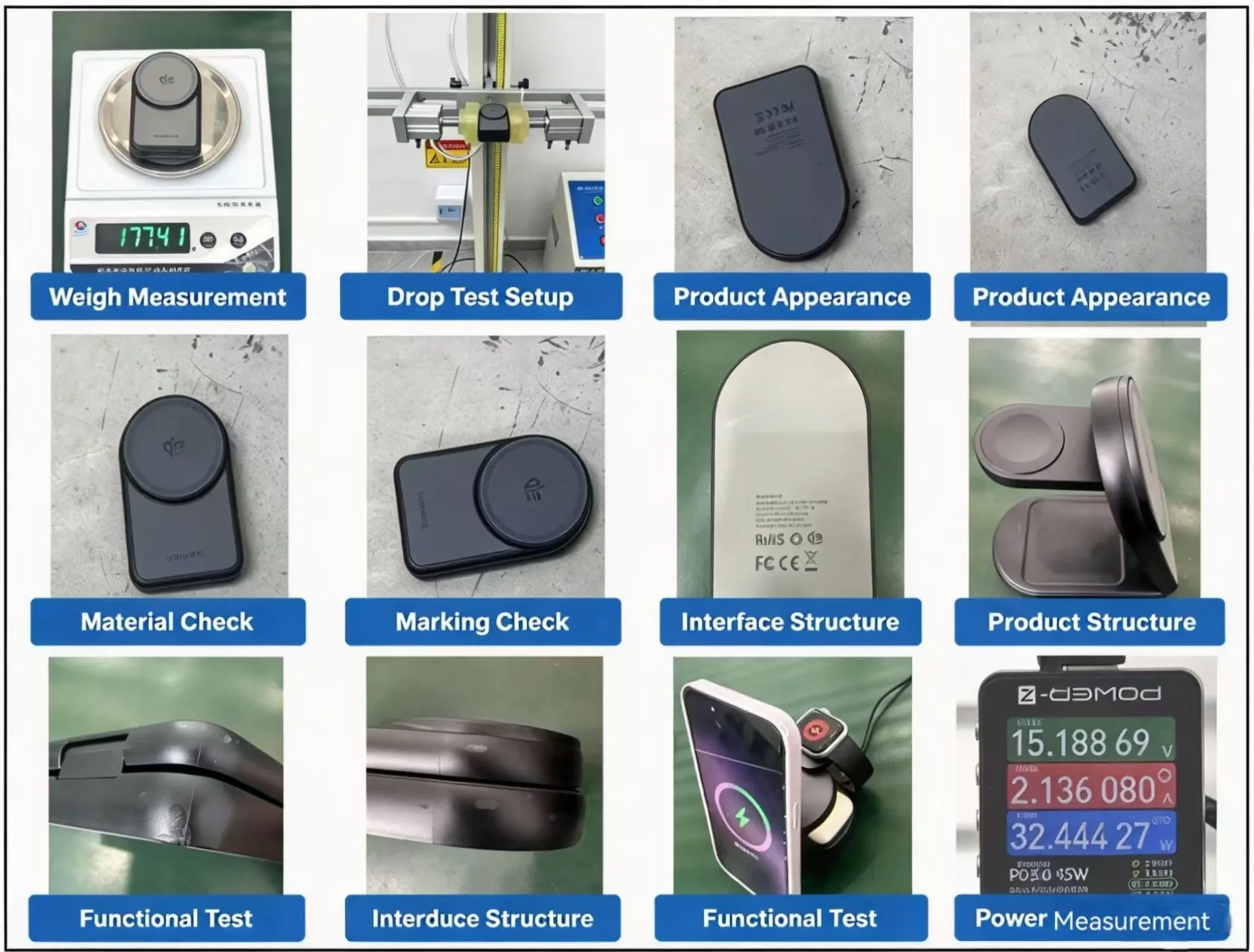
Drop testing verifies that a wireless charger can withstand transportation impacts while maintaining its structural integrity and normal functionality.
How Do You Test a Wireless Charger for Drop Resistance?
Drop testing evaluates the structural durability and functional stability of a wireless charger after accidental drops during transportation or handling. It helps verify that the product can withstand common mechanical impacts without affecting its key functions.
Why Is Drop Testing Important?
Wireless chargers may experience impacts during production, transportation, warehousing, or daily handling. A reliable product should maintain its basic structure and functionality after a drop.
Drop testing helps verify:
- Structural and housing durability
- Resistance to transportation impacts
- Stability of internal components
- Normal operation after impact
How Do We Perform the Test?
The test is performed according to GB/T 2423.8 at room temperature.
- Select the appropriate drop height according to the product weight and test requirements.
- Drop the bare sample freely from a height of 1 meter, without applying additional external force.
- Test the most unfavorable directions, including one corner, three edges, and six faces, onto a level concrete surface.
What Makes the Test Qualified?
The test is considered PASS when the product remains functional after the specified drops, with no damage that affects normal operation.
Test Result: PASS
After free-fall drops from 1 meter, the sample showed only minor surface and edge marks, while all functions remained normal.