
Jul 23, 2026News & Insights
The Rise of Qi2: How Wireless Charging Is Entering a New Era in 2026
Wireless charging is entering a new era in 2026 with the rapid growth of Qi2 technology.
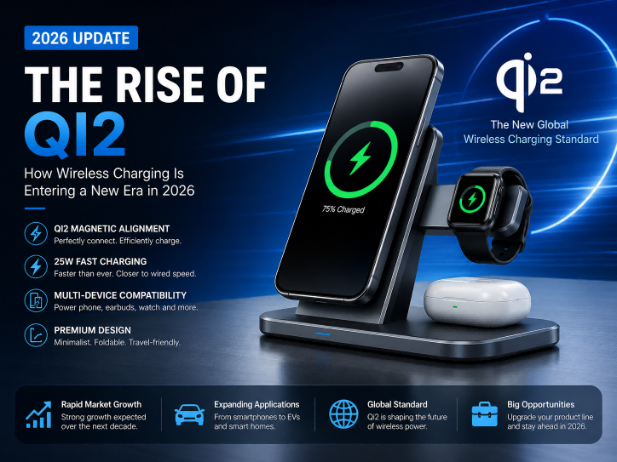
Wireless charging technology is evolving faster than ever, and 2026 is becoming a turning point for the industry. With the rapid adoption of the new Qi2 standard, consumers are no longer satisfied with “basic wireless charging.” They now expect faster speeds, magnetic alignment, multi-device compatibility, and premium design experiences.
Qi2 technology introduces magnetic alignment similar to MagSafe, allowing devices to connect more accurately to charging coils. This improves charging efficiency, reduces energy loss, and minimizes overheating problems — one of the biggest pain points in earlier wireless charging generations. Industry reports show that Qi2 is quickly becoming the new global standard for smartphones, earbuds, wearables, and even automotive applications.
Another major trend is the rise of 25W wireless charging. Previously, most wireless chargers were limited to 15W, but the latest Qi2.2 technology is pushing wireless charging closer to wired charging performance. Several major smartphone brands are already preparing products that support faster wireless charging ecosystems.
At the same time, consumers are demanding cleaner desk setups and more integrated charging solutions. As a result, 3-in-1 and 6-in-1 wireless charging stations are becoming increasingly popular in both retail and corporate gifting markets. These products combine phone, earbuds, smartwatch, and even tablet charging into a single compact device.
From a product design perspective, minimalist aluminum finishes, foldable structures, and travel-friendly designs are becoming key differentiators. Wireless chargers are no longer viewed as simple accessories — they are now lifestyle and workspace products that reflect modern aesthetics and convenience.
Industry analysts predict the wireless charging market will continue growing rapidly over the next decade, driven by standardization, electric vehicle integration, and smart home ecosystems.
For brands and distributors, 2026 represents a major opportunity to upgrade product portfolios and enter the next generation of charging technology.